


PhD in Business Research
A Dual-Degree PhD Program in Advanced Business Research
- PROGRAM DETAILS
- What you Will Achieve
- Program Structure
- Program Features
- Master-In-Passing
- Admissions
- Tuition
- _
- POST-DOCTORAL PROGRAMS
- Post-Doc: DLitt. By Manuscript
- Post-Doc: By Published Articles
- _
- ACADEMIC PROGRAMS
- PhD in Business Research
- PhD in Economics
- PhD in International Relations
- Doctor of Social Science
- _
- APPLIED PROGRAMS
- Doctor of Business Administration
- Doctor of Leadership
- Doctor of Management
- Doctor of Professional Studies
- _
- MASTER PROGRAMS
- MPhil in Business Research
- MA in Business Research
- _
- APPLICATION & ADMISSIONS
- Online Application
- Admissions Contact
The Doctor of Philosophy (PhD) in Business Research at Monarch Business School Switzerland represents the institution’s highest academic qualification and reflects its long-standing identity as a Swiss Doctoral Institute of Advanced Management Studies. Designed for experienced managers, consultants, executives, and early-career academics, the program provides a rigorous and structured pathway for candidates seeking to generate original knowledge in management through independent, methodologically robust, and ethically grounded research.
At Monarch, the capacity to research is regarded as the highest expression of professional maturity. The PhD welcomes both early-career academics and seasoned professionals who wish to engage in rigorous scholarly inquiry while remaining connected to their professional practice. This reflects Monarch’s conviction that research and practice are complementary forms of learning—each enriching the other and fostering responsible, ethical leadership within complex organizational environments.
The program emphasizes intellectual independence, methodological rigor, and reflective interpretation. Candidates are encouraged to explore the human and ethical dimensions of management, challenge prevailing assumptions, and generate insights that support a more thoughtful and sustainable global economy. Guided closely by Monarch’s faculty mentors, doctoral researchers pursue studies that intentionally bridge theory and lived experience, producing work that is academically rigorous while also grounded in organisational reality.
A distinctive component of Monarch’s approach is the dual-award structure, which enables candidates to progress through the Master-in-Passing (M.Phil.) in Business Research before completing the full doctoral dissertation. This integrated framework aligns with European traditions of advanced research training and ensures that candidates develop deep competence in research design, qualitative inquiry, reflective analysis, and theoretical engagement.
Graduates of the PhD in Business Research emerge as scholarly practitioners capable of advancing management thought, contributing to academic and professional communities, and engaging meaningfully with global challenges through responsible and informed research.
What You Will Archieve
| Mastery of Research Methods | Develop advanced qualitative and interpretive research competencies, including phenomenology, lived-experience inquiry, and reflective analysis aligned with European doctoral traditions. |
| Original Theoretical Contribution | Produce a defensible and innovative theoretical contribution that advances understanding within your chosen domain of management or organisational inquiry. |
| Advanced Academic Writing | Develop high-level academic writing skills enabling the production of coherent, analytically rigorous, and publication-ready scholarly work. |
| Theory–Practice Integration | Learn to synthesise lived professional experience with scholarly reflection, strengthening the relevance and explanatory power of your research. |
| Critical Interpretation & Inquiry | Develop the ability to examine complex organisational, ethical, and human challenges through multiple interpretive frameworks and reflective analysis. |
| Scholarly Identity Formation | Build an academic identity through engagement with Monarch’s global research community and opportunities for participation in the Monarch Research Paper Series (MRPS). |
| Independent Research Leadership | Cultivate the independence, reflective leadership, and intellectual confidence necessary for long-term scholarly and professional contribution. |
Program Structure of the PhD in Business Research
The doctoral journey follows a clearly defined structure that reflects the intellectual and developmental progression of advanced research as recognized within the broader European academic tradition. The sequence of phases aligns with the research competencies articulated in the European Qualifications Framework (EQF) for advanced study , supporting the development of high-level analytical skills, independent inquiry, and scholarly contribution.
Each phase builds intentionally upon the last, guiding candidates from the acquisition of core methodological competencies to the formulation of a research agenda, the execution of disciplined inquiry, and ultimately the formal defense of the completed doctoral manuscript. This structured progression ensures that candidates steadily refine their ability to conceptualize complex management phenomena, engage critically with the literature, and design and conduct meaningful research that contributes to the advancement of management knowledge.
While academically rigorous, the program also maintains a degree of flexibility that respects the professional responsibilities of working executives and scholar-practitioners. Candidates advance through a series of learning and research milestones—each supported by experienced faculty mentors—designed to strengthen their theoretical insight, methodological proficiency, and intellectual independence. Institutional oversight and academic review are integrated at every stage, ensuring that all doctoral work reflects Monarch’s high standards of scholarly excellence.
The following phases outline the academic framework of the PhD in Business Research, presenting a clear pathway from initial preparation through to inquiry, writing, and the culmination of the doctoral degree.
Preparatory Phase
The Preparatory Phase establishes the foundation for doctoral study, equipping candidates with the skills and conceptual grounding required for independent research. During this stage, candidates complete a series of Research Skills Courses that cover research design, qualitative and quantitative methodologies, academic writing, critical thinking and the philosophy of science. These courses are designed to build both methodological competence and critical awareness, preparing candidates to engage thoughtfully with academic literature and theoretical frameworks.
Proposal Phase
Building upon the foundation established in the preparatory stage, candidates enter the Proposal Phase, where they begin the formal design of their doctoral research. Under the guidance of a supervising professor, candidates participate in the Research Proposal Perfecting Module, an individualized mentorship process aimed at refining the scope, structure, and academic rigor of the proposed study. The module emphasizes the formulation of a clear research question, the integration of relevant literature, justification of methodology, and the articulation of ethical and theoretical frameworks. The Proposal Phase culminates in the submission and approval of the Research Proposal by the Administration, marking the formal transition from coursework to the research stage of the doctoral journey.
Research Phase
The Research Phase marks the transition from proposal design to active inquiry. Under faculty supervision, candidates implement their approved research design, conducting fieldwork, case studies, interviews, or conceptual analyses as appropriate to their methodological approach. This stage emphasizes disciplined execution and reflective engagement — ensuring that data collection, interpretation, and theoretical framing remain aligned with the research objectives. Throughout this process, candidates continue developing the first three chapters of their dissertation, refining the theoretical context, literature review, and methodology in light of emerging insights from the field. The Research Phase culminates in the completion of the fieldwork and preliminary analysis, establishing the empirical and conceptual foundation upon which the final manuscript will be built.
Dissertation Phase
The Dissertation Phase represents the synthesis of the entire doctoral journey. Drawing on findings from the field and on the evolving theoretical framework, candidates complete the final chapters of the dissertation — presenting analysis, discussion, and conclusions that demonstrate scholarly depth, methodological rigor, and originality of thought. This stage also involves a comprehensive review and integration of earlier work, ensuring that the full manuscript reflects coherence between theoretical framing, research design, and interpretation of results. The outcome is a dissertation that not only contributes to academic knowledge but also reflects the candidate’s intellectual growth as an independent researcher. Upon completion of the manuscript, candidates proceed to the Presentation Stage, where they formally defend or present their work before the academic or review committee.
Presentation Stage
The final phase of the academic programs culminates in the Viva Voce, the formal oral defense of the doctoral dissertation before the Academic Committee. This stage demonstrates the candidate’s ability to articulate and defend their research findings, methodological choices, and theoretical contributions within the context of established scholarship. To support this process, candidates complete a Presentation Preparation Course, which provides structured guidance in synthesizing complex research arguments, responding to academic critique, and communicating the significance of their work to both scholarly and professional audiences. Successful completion of the Viva Voce marks the conferral of the doctoral degree
The structured progression of the PhD in Business Research ensures that each candidate develops the full range of scholarly, methodological, and analytical competencies expected of a doctoral researcher. By the conclusion of the program, candidates demonstrate mastery of independent inquiry, critical thinking, contribute original insights to the field of management, and embody Monarch Switzerland’s commitment to advancing ethical, evidence-based leadership and research excellence.
Request Information
Have questions about this doctoral program? Our Admissions Office is available to assist.
Key Program Features
| • | Milestone-Based Doctoral Framework |
| • | Original Theoretical Contribution |
| • | Integrated M.Phil. Dual-Degree Pathway |
| • | Close Faculty Supervision |
| • | Structured for Working Professionals |
| • | Ethical & Responsible Scholarship |
| • | Global Research Community Access |
Study Mode For Working Professionals
| • | Designed specifically for working professionals balancing full-time responsibilities. |
| • | Primary modality: fully remote study from your home country with no mandatory residency. |
| • | Asynchronous learning structure allowing you to study on your schedule. |
| • | Periodic on-campus doctoral workshops offered in Switzerland for research support and community engagement. |
| • | No requirement to relocate or take leave from professional duties. |
| • | Ideal for executives, senior managers, consultants, and practitioners pursuing doctoral-level scholarship. |
Open Research Domains
| • | Monarch welcomes doctoral research across all professional and academic domains. Candidates are not limited to predefined topics or subject lists. |
| • | Your research interest whether emerging, interdisciplinary, or highly specialised will be developed, refined, and academically aligned during the Research Proposal phase. |
| • | Faculty mentorship ensures that your chosen domain supports both doctoral-level rigor and professional relevance, enabling a high-impact applied or theoretical contribution. |
Program Features
The PhD in Business Research at Monarch Switzerland is designed to provide both intellectual depth and practical relevance. The program’s features reflect Monarch’s commitment to individualized mentorship, academic rigor, and scholarly excellence within a flexible structure that supports working professionals. Each element of the program reinforces the development of independent research capability, ethical awareness, and global perspective expected of doctoral scholars at a leading international institute.
| Scholarly Focus | The PhD emphasizes original contribution to knowledge through advanced theoretical development and critical reflection on management and organizational practice. |
| Faculty Supervision | Candidates work under the close supervision of experienced researchers and senior academics, ensuring methodological depth and scholarly excellence throughout the research journey. |
| Flexible Structure | The milestone-based format accommodates working professionals, allowing candidates to progress at a manageable pace while maintaining professional commitments. |
| Research Phase | During the research phase, candidates engage in sustained inquiry and critical reflection that connects theory to practice. While grounded in theoretical development, the program promotes active engagement with contemporary issues through academic publication, conference participation, and dialogue with leading scholars and policy thinkers. This approach ensures that doctoral research remains both intellectually rigorous and socially relevant, reflecting Monarch’s emphasis on responsible scholarship and applied impact. |
| Dual-Degree Framework | The program incorporates Monarch’s integrated degree structure, recognizing progression and completion through the Master-in-Passing (M.Phil.) in Business Research and Master-in-Exit (M.Phil.) pathways. This structure acknowledges mastery of research design, analytical reasoning, and theoretical synthesis achieved throughout the doctoral journey. |
| Global Research Access | Candidates gain access to Monarch’s international scholarly community, digital research resources, and doctoral mentorship network supporting global academic engagement. |
Together, these features embody Monarch Switzerland’s philosophy of doctoral education—one that unites scholarly independence with intellectual discipline and ethical purpose. Candidates emerge not only as researchers capable of producing original knowledge, but as reflective leaders equipped to influence management practice and thought on a global scale.
Master-in-Passing
The PhD in Business Research at Monarch Switzerland incorporates a flexible and academically rigorous framework that recognizes both progression and completion through the Master of Philosophy (M.Phil.) in Business Research. The M.Phil. serves as an integral element of the doctoral journey, reflecting Monarch’s commitment to accessibility, progression, and academic integrity within advanced management research.
Master-in-Passing (Default Award)
Candidates who successfully complete all doctoral requirements are automatically granted the M.Phil. in Business Research in passing upon conferral of the PhD. This recognizes mastery of research design, theoretical framing, and analytical competence achieved throughout the doctoral program, and affirms the integrated nature of Monarch’s dual-degree structure.
Master-in-Exit (Terminal Award)
Candidates who wish conclude their studies prior to the completion of the PhD program for personal, professional, or research-related reasons may qualify for the M.Phil. as a terminal award by submitting a completed five-chapter master’s thesis. The M.Phil. in this form does not require an original contribution to knowledge, distinguishing it clearly from the doctoral award. Rather, it represents a complete and academically defensible qualification that affirms the candidate’s ability to conduct structured research and engage critically with management scholarship at a high level.
Through both the Master-in-Passing and Master-in-Exit pathways, Monarch Switzerland ensures that every candidate’s academic effort culminates in a meaningful qualification. This dual structure reflects Monarch’s commitment to combining scholarly excellence with human understanding, recognizing the diverse ways in which individuals contribute to the advancement of management knowledge.
Program Research Philosophy
The Monarch PhD in Business Research emphasizes independent scholarly inquiry grounded in the European tradition of critical reflection and theoretical contribution.
Candidates are encouraged to explore management as a human and social science, seeking meaning beyond metrics or application.
Doctoral research at Monarch values intellectual autonomy, methodological rigor, and interpretive depth.
Each candidate is supported in developing a distinctive voice as a reflective scholar—one capable of shaping contemporary management thought through reasoned, ethical, and original insight.
Admission & Entry Requirements
Admission to the PhD in Business Research is selective and based on academic preparation, professional experience, and demonstrated research potential. Applicants must normally hold a recognized master’s degree or equivalent qualification and show capacity for independent, critical inquiry. Prior research or publication experience is advantageous but not required.
Experienced managers and professionals holding a bachelor’s degree may also be considered for admission upon the recommendation of the Dean, where their professional achievements and leadership record are deemed to provide sufficient equivalence for doctoral-level study.
Applications are reviewed by the Academic Board to ensure alignment between proposed research areas and Monarch’s supervisory expertise. Candidates are expected to demonstrate intellectual curiosity, maturity, and a clear sense of purpose in pursuing advanced scholarly inquiry.
Tuition of the PhD in Business Research
All doctoral programs at Monarch Switzerland follow a milestone-based structure designed to support the research, writing, and analytical demands of advanced scholarly inquiry. Tuition is assessed on a quarterly basis for the duration of the candidate’s active registration in the program, ensuring uninterrupted access to supervisory guidance, academic resources, and institutional support throughout the research process.
Dual Pathway Structure
The PhD may be pursued through either the Standard Duration Pathway or the Extended Duration Pathway, both of which carry the same total tuition. This dual-pathway model enables candidates to select the pacing that best aligns with their professional responsibilities while maintaining full academic standing.
Under the Standard Duration Pathway (36 months), tuition is payable at €3,250 per quarter, with an optional monthly payment arrangement of €1,083 to support financial planning and continuity of study. Candidates who prefer a more gradual pacing may elect the Extended Duration Pathway (60 months), which carries a proportionally lower quarterly fee of €1,950 or a monthly equivalent of €650, while preserving full access to supervisory and institutional services.
Candidates who require additional time beyond the 36-month Standard Duration Pathway or the 60-month Extended Duration Pathway may continue their registration under Monarch’s continuation policy, which is assessed on an annual basis at 50% of the regular tuition rate. This continuation framework maintains academic standing and ensures uninterrupted access to supervisors, research platforms, and administrative services while allowing candidates the necessary time to complete their dissertation at a responsible and achievable pace.
Detailed information regarding billing cycles, payment procedures, and administrative policies is provided in the official Application and Information Package, available upon request. The global tuition table for all programs may be viewed here.
Who Should Apply
The Monarch PhD in Business Research welcomes reflective professionals and academics who wish to deepen their understanding of management as a scholarly discipline and contribute to its ongoing theoretical development. Graduates emerge as thought leaders and researchers prepared to influence both academia and practice.
| • | Senior or executive managers seeking intellectual renewal |
| • | Academics pursuing advanced research and publication |
| • | Consultants and advisors expanding into reflective practice |
| • | NGO / IGO professionals engaged in global policy and governance |
| • | Scholars dedicated to ethical and responsible management research |
Doctoral Graduate Profiles
Dr. Louise Delaney – Ireland
PhD in Business Research – Doctor of Leadership
Dr. Louise Delaney entered the doctoral program with more than twenty years of senior management experience in the multinational technology sector in Ireland. Her background includes leading high-performance sales, operations, and innovation teams within major U.S. technology subsidiaries—experience that provided a strong foundation for a research inquiry focused on leadership culture as a mediating factor influencing innovation in complex, fast-moving environments. Her dissertation, “Leadership Culture as an Antecedent to Innovation: A Qualitative Study of American Multinational Technology Subsidiaries in Ireland (2020–2024)”, employed interpretative phenomenological analysis to examine the lived experiences of leaders navigating innovation expectations under shifting organisational and global conditions.
The study integrated both primary and secondary data and articulated a multi-layered framework of structural, cultural, and adaptive enablers that support innovation capacity within U.S. technology subsidiaries operating in Ireland. Dr. Delaney’s research provides subsidiary leaders with a diagnostic tool to assess innovation readiness, offering clear guidance on how leadership culture can either catalyse or constrain innovation performance—insights that are increasingly vital as Ireland continues to position itself as a strategic hub for technology inward investment.
Drawing on her doctoral findings, Dr. Delaney now advises multinational subsidiary organisations on cultivating innovation cultures in the post-pandemic era, focusing on lived-experience data gathered directly from leaders in the field. Her work helps strengthen subsidiary thought-leadership and future-proof leadership practices amid height.

Dr. Renier Krige – South Africa
PhD in Organisational Dynamics
Dr. Renier Krige entered the PhD in Organisational Dynamics program with over two decades of executive and consulting experience across multiple sectors, including energy, aviation, healthcare, manufacturing, agriculture, and logistics. His extensive background in organisational development, human capital strategy, and performance architecture provided a strong foundation for a research inquiry centred on the behavioural and structural dynamics driving brand loyalty within complex multi-national environments. His dissertation— titled “Organisational Dynamics: The Impact of Human Capital in Creating Brand Loyalty in a Multi-National Agricultural Context”—employed a mixed-methods design that integrated primary and secondary data analysis, reflecting Monarch’s emphasis on scholarship grounded in lived organisational experience.
His study articulated a nuanced understanding of how organisational dynamics enable human capital capabilities to contribute to brand loyalty—particularly within the context of perishable agricultural goods—while offering clear insights into leadership behaviour, capability development, and strategic alignment.
Dr. Krige continues his professional work UniFruiti SA, where he advises organisations on executive talent management, human capital frameworks, organisational diagnostics, and performance navigation. The doctoral research enriches his practice by providing a refined theoretical and empirical foundation for understanding how human capital systems interact with organisational structures to shape stakeholder perceptions and brand outcomes. His trajectory exemplifies Monarch’s commitment to producing reflective scholar-practitioners capable of both intellectual and organisational influence.

Dr. Samrat Sisodia – United States / India
PhD in Business Research
Dr. Samrat Sisodia completed the PhD in Business Research after an extensive career in global pharmaceutical regulatory affairs, specializing in Chemistry, Manufacturing, and Controls (CMC) strategy and regulatory submissions to major international health authorities. With more than a decade of leadership experience across the U.S. FDA, EMA, MRP/DCP European procedures, and regulatory frameworks in India and emerging markets, Dr. Sisodia entered the program with deep expertise in highly regulated, science-driven global environments.
Across senior roles with Upsher-Smith Laboratories, Perrigo R&D, Invagen Pharmaceuticals, Sandoz, Alembic, and Aurobindo Pharma, he led teams responsible for ANDA, NDA (505(b)(1)/(b)(2)), and IND submissions in traditional and eCTD formats. His portfolio includes more than 60 ANDA filings, 7 NDAs, 11 INDs, numerous supplements, and regulatory oversight of over 30 approved products annually. His experience spans CMC strategy, regulatory risk assessment, bioequivalence study review, and cross-functional leadership in global drug development.
His doctoral research addressed the managerial and strategic dimensions of pharmaceutical regulatory affairs, exploring how organizations design regulatory pathways, manage submission complexity, and align scientific, operational, and commercial teams within evolving compliance environments. The study offered applied insight into optimizing regulatory efficiency, accelerating time-to-approval, and strengthening organizational capability in multinational pharmaceutical systems.
Dr. Sisodia’s professional and academic trajectory exemplifies how the PhD in Business Research equips scientifically grounded professionals to integrate technical expertise with strategic, managerial, and organizational insight—advancing leadership impact in one of the world’s most complex and globally regulated industries.
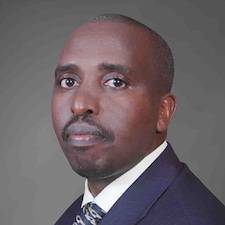
Dr. Benjamin Rutimirwa – Rwanda
PhD in Business Research
Dr. Benjamin Rutimirwa completed the PhD in Business Research with a distinguished career in public-sector regulation, economic policy, and utility governance in Rwanda. His professional trajectory spans more than two decades of service within the Rwanda Utilities Regulatory Authority (RURA), where he held roles across licensing, tariff analysis, consumer protection, and economic affairs.
Throughout his tenure at RURA, he contributed to national tariff-setting for electricity, water, and public transport; regulatory audits; telecommunications contract review; and large-scale consumer outreach initiatives. His work reflects a deep engagement with regulatory design, economic oversight, and evidence-based public policy development.
His doctoral research examined the governance and economic dimensions of utility regulation in emerging markets, exploring how tariff frameworks, legal systems, and institutional arrangements shape service delivery and economic outcomes. The study offered applied insight into improving regulatory transparency, pricing efficiency, and citizen protections within essential services sectors.
Dr. Rutimirwa’s broader professional experience includes financial management, auditing, and supervisory board leadership across cooperatives and public institutions, demonstrating his long-standing commitment to national development and institutional strengthening.
His work embodies Monarch’s commitment to producing scholar-practitioners capable of advancing regulatory effectiveness, economic justice, and public-sector performance through applied doctoral research.

