

PhD in Economics
A Dual-Degree Doctorate Exploring Economic Theory, History, and Society

- MASTER PROGRAMS
- MPhil in Business Research
- MA in Business Research
- Executive MBA
- ADMISSIONS
- Online Application
- Admissions Contact
- DOWNLOADS
- Study Pathways
- Tuition Policy
The PhD in Economics at Monarch Business School Switzerland is a research-intensive doctorate dedicated to the study of economic theory, the evolution of economic thought, and the philosophical foundations that guide economic reasoning. The program is designed for candidates who wish to move beyond technical modelling and engage deeply with the conceptual structures that shape how societies understand value, exchange, development, and human prosperity.
Monarch’s approach emphasizes interpretive reasoning, historical analysis, philosophical inquiry, and ethical reflection. Rather than viewing economics solely as a predictive science, the program invites candidates to examine how economic ideas emerge, how they evolve over time, and how they influence decisions at the policy, institutional, and societal levels. This includes exploring the intellectual lineages that have shaped modern economic thinking and assessing how these ideas continue to inform organizational and national choices.
Throughout the program, candidates are encouraged to approach economics as a form of social commentary and critical interpretation. Economic frameworks are examined not only for their analytical power but also for how they illuminate trade-offs, unintended consequences, and the moral dimensions of resource allocation. Many of history’s most influential economists have served in this role—scholars who bridged rigorous theory with public discourse, offering insights into justice, sustainability, governance, and the human condition.
The Monarch PhD in Economics seeks to cultivate this tradition of the economist as interpreter, reflective scholar, and engaged public thinker. Rooted in Monarch’s ethos of responsible scholarship and reflective inquiry, the program equips candidates to contribute meaningfully to contemporary debates on the purpose and impact of economic activity. Graduates emerge prepared to articulate economic ideas in ways that influence policy, enrich academic dialogue, and deepen public understanding of the systems that shape collective welfare.
What You Will Achieve
| Advanced Economic Theory Mastery | Develop a deep and critical understanding of key traditions within economic thought, including classical, institutional, behavioural, and heterodox perspectives relevant to a globalised economy. |
| Policy Analysis & Impact Evaluation | Gain the ability to evaluate public, corporate, and development policies through rigorous, conceptually grounded frameworks that assess efficiency, equity, and long-term societal consequences. |
| Institutional & Structural Economic Inquiry | Examine how institutional structures, political economies, and governance systems shape economic outcomes, with attention to global, emerging, and developing markets. |
| Research Design & Methodological Pluralism | Design theoretical or interpretive research projects that draw from historical analysis, comparative case inquiry, or mixed-methods approaches aligned with Monarch’s emphasis on lived experience and human-centred economic reasoning. |
| Ethics, Sustainability & Economic Justice | Develop the capacity to analyse the ethical, social, and environmental implications of economic behaviour, policy regimes, and institutional decision-making within diverse international contexts. |
| Scholarly Writing & Publication Readiness | Build advanced scholarly writing skills to produce conceptually rigorous, publication-ready research that contributes to academic dialogue in economics and policy studies. |
| Thought Leadership in Economic Reasoning | Cultivate the intellectual independence and reflective insight necessary to act as a thought leader capable of advancing economic understanding and informing decision-making across sectors. |
Program Structure
The PhD in Economics at Monarch Business School Switzerland follows a clearly articulated structure designed to integrate theoretical depth, interpretive analysis, and ethical reflection. Each phase builds progressively toward the development of an original doctoral dissertation, guiding candidates from foundational preparation through conceptual exploration and ultimately to the synthesis and defense of their scholarly work. The design emphasizes disciplined argumentation, methodological clarity, and mastery of the philosophical and historical dimensions of economic thought.
Monarch’s mentor-guided, multistage framework strengthens both analytical precision and interpretive coherence. Through structured supervision and formal academic review at each milestone, candidates develop the capacity to analyze, critique, and reframe established theories within the broader social, cultural, and moral context of economics. This ensures that graduates emerge not only as capable researchers but also as reflective scholars ready to contribute meaningfully to economic discourse.
In accordance with the European Qualifications Framework (EQF) standards, the program incorporates a recognized intermediate qualification: upon the successful completion of all program requirements candidates are concurrently awarded the Master of Philosophy (M.Phil.) degree as a Master-in-Passing. This credential formally recognizes that, through the successful completion of the PhD, the candidate has demonstrated full mastery of the advanced theoretical competencies associated with the M.Phil. degree.
The following phases outline the academic framework of the Doctor of Philosophy in Economics, detailing the pathway from initial research preparation to manuscript completion and the oral defense before the Review Committee
Preparatory Phase
The Preparatory Phase provides candidates with the conceptual and methodological grounding required for advanced research in economics. During this stage, candidates complete core Research Skills modules that address the philosophy of social science, qualitative and interpretive research design, academic writing, and the history of economic thought. The objective is to cultivate a broad understanding of epistemological traditions and critical reasoning approaches that inform theoretical economics.
Proposal Phase
Building upon this foundation, candidates enter the Proposal Phase, where they define their doctoral research question and theoretical framework. Under faculty supervision, candidates refine the scope, structure, and academic coherence of their proposed study. The proposal must demonstrate mastery of existing literature, identify conceptual gaps, and articulate the intended theoretical and ethical contributions to the field. Approval of the proposal marks formal entry into the doctoral research phase.
Research Phase
The Research Phase constitutes the central stage of doctoral inquiry. Candidates critically examine primary and secondary sources, including foundational economic texts, historical policy documents, and comparative frameworks across schools of thought. Inquiry may involve conceptual modeling, policy interpretation, or theoretical synthesis rather than empirical data collection.
To maintain relevance and intellectual grounding, candidates may also conduct interviews with economists, policymakers, or thought leaders whose insights illuminate the practical implications or contemporary resonance of the theoretical work. These engagements ensure that the doctoral research remains connected to the lived realities of economic practice while preserving its conceptual rigor.
Throughout this stage, candidates deepen their analytical and interpretive skills, testing ideas through scholarly dialogue, critical reflection, and peer-reviewed feedback. The process fosters intellectual maturity and ensures that each doctoral manuscript bridges the reflective and applied dimensions of economic understanding.
Dissertation Phase
The Dissertation Phase represents the culmination of the candidate’s research journey. Findings and theoretical insights are synthesized into a doctoral dissertation that advances understanding of economic reasoning, ethics, and policy interpretation. The work must evidence originality of thought, methodological discipline, and conceptual innovation—linking economic ideas to the broader human and social context.
Defense Stage
The program concludes with the candidate’s oral defense of the doctoral dissertation before the Academic Committee. This presentation synthesizes the research narrative, findings, and theoretical implications, evidencing scholarly depth, intellectual independence, and the contribution of new perspectives to the field of economic thought. Candidates must demonstrate mastery of economic theory, coherence of argumentation, and the relevance of their findings to contemporary policy and social discourse.
The structured progression of the PhD in Economics ensures that each candidate develops the full range of scholarly and analytical competencies expected of a research economist. By the conclusion of the program, candidates demonstrate mastery in theoretical reasoning, critical interpretation, and ethical reflection—skills essential to understanding and articulating the deeper forces shaping economic and social systems. Each graduate embodies Monarch’s vision of the economist as an interpreter of society: a reflective scholar capable of bridging economic theory and human experience to advance responsible thought, sustainable development, and public understanding.
Request Information
Have questions about this doctoral program? Our Admissions Office is available to assist.
Program Delivery & Admissions
- Delivery Mode: Online / Hybrid
- Format: Flexible / Asynchronous
- Admissions: Rolling Admissions
- Start Date: 1st of Each Month
- Pace: Standard & Extended Paths
- On-Site Workshops: Optional
- Location: Switzerland
Academic Foundations of the PhD in Economics
The PhD in Economics at Monarch is grounded in rigorous economic scholarship and policy-relevant inquiry,
combining theoretical depth, methodological discipline, and responsible interpretation of economic systems.
| • | Milestone-based doctoral framework emphasizing original research in economics and policy analysis |
| • | Focus on economic theory and rigorous methodological inquiry, including applied econometric analysis where appropriate, for the evaluation of complex economic systems |
| • | Integration of methodological rigor with interpretive understanding of economic behavior and institutions |
| • | Structured for working professionals pursuing academic, policy, or institutional research careers |
| • | Close supervision by senior researchers specializing in macroeconomics, microeconomics, and development studies |
| • | Commitment to ethical inquiry and responsible interpretation of economic and social outcomes |
| • | Participation in Monarch’s global research community and publication opportunities through the MRPS. |
Flexible Doctoral Structure for Professional Scholars
Monarch’s doctoral programs are intentionally designed for working professionals, combining academic rigor with a flexible, hybrid study structure that supports sustained progress and successful completion.
| • | Designed specifically for working professionals balancing full-time responsibilities |
| • | Hybrid doctoral modality: primarily remote study with optional on-campus scholarly workshops |
| • | Rolling admission with no fixed start dates |
| • | Milestone-based progression rather than semester lockstep |
| • | Ongoing remote access to academic supervision and research platforms |
| • | Extended duration (part-time) pathways with reduced periodic tuition |
| • | Continuation periods @50% fees available when additional time is required. |
Research Domains in Economics
| • | The PhD in Economics welcomes research across a wide range of economic domains—such as development, labour, public policy, monetary and financial systems, innovation, and global political economy. |
| • | Candidates are encouraged to pursue topics that advance economic theory and conceptual understanding, using historical, comparative, institutional, or interpretive perspectives to interrogate how economies function. |
| • | Your specific domain and research question will be refined during the Research Proposal phase with faculty supervision, with primary emphasis on theoretical argumentation, conceptual clarity, and critical reflection on the assumptions that shape economic ideas and policy debates. |
Program Features
The Doctor of Philosophy (PhD) in Economics at Monarch Business School Switzerland is designed to cultivate scholars capable of deep theoretical reasoning, historical interpretation, and ethical reflection. The program’s features reflect Monarch’s commitment to academic rigor, individualized mentorship, and interdisciplinary engagement within the field of economic thought.
Structured for advanced researchers and reflective practitioners alike, the PhD encourages candidates to explore economics as both a theoretical discipline and a lens through which to interpret social and institutional change. Each element of the program strengthens the candidate’s ability to integrate conceptual analysis, philosophical insight, and practical understanding of the moral and societal dimensions of economic systems.
| Theoretical and Historical Focus | The PhD in Economics emphasizes original contribution to knowledge through the study of economic theory, philosophy, and the evolution of economic thought. Candidates explore the conceptual, historical, and ethical foundations of economic systems to understand how ideas about value, exchange, and policy have shaped modern societies. |
| Faculty Supervision | Candidates are guided by experienced faculty and research supervisors who specialize in economic philosophy, history of economic thought, and social theory. Mentorship emphasizes critical reasoning, interpretive rigor, and responsible academic inquiry throughout the doctoral journey. |
| Flexible Structure | The milestone-based format accommodates both academic and professional researchers, allowing candidates to progress at a manageable pace while engaging deeply with economic theory, history, and applied interpretation. |
| Research Phase | During the research phase, candidates engage in sustained inquiry that connects economic theory to social and institutional realities. While grounded in theoretical development, the program promotes active engagement with contemporary issues through academic publication, conference participation, and dialogue with leading economists and policy thinkers. This ensures that doctoral research remains both intellectually rigorous and socially relevant. |
| Dual-Degree Framework | The program incorporates Monarch’s integrated degree structure, recognizing progression and completion through the Master-in-Passing (M.Phil.) in Economics and Master-in-Exit (M.Phil.) pathways, affirming mastery of theoretical synthesis and critical interpretation within the economic and social sciences. |
| Global Research Access | Candidates gain access to Monarch’s international research community, academic resources, and scholarly networks supporting global engagement in the study of economic thought and policy. The collaborative environment fosters cross-disciplinary dialogue and the exchange of ideas across cultures and institutions. |
Master-in-Passing
The PhD in Economics at Monarch Business School Switzerland incorporates a flexible and academically rigorous framework that recognizes both progression and completion through the Master of Philosophy (M.Phil.) in Research. The M.Phil. serves as an integral element of the doctoral journey, reflecting Monarch’s commitment to accessibility, academic excellence, and intellectual integrity within the social and economic sciences.
Master-in-Passing (Default Award)
Candidates who successfully complete all doctoral requirements are automatically granted the M.Phil. in Research in passing upon conferral of the PhD. This recognizes mastery of research design, theoretical synthesis, and analytical competence achieved throughout the doctoral program, and affirms the integrated nature of Monarch’s dual-degree structure.
Master-in-Exit (Terminal Award)
Candidates who choose to conclude their studies prior to completing the PhD program may qualify for the M.Phil. in Research as a terminal award by submitting a completed five-chapter master’s dissertation. The M.Phil. in this form does not require an original contribution to knowledge but represents a complete and academically defensible qualification that affirms the candidate’s capacity for structured research, critical reasoning, and interpretive analysis at a high scholarly standard.
Through both the Master-in-Passing and Master-in-Exit pathways, Monarch Business School Switzerland ensures that every candidate’s academic effort culminates in a meaningful qualification. This dual structure reflects Monarch’s philosophy of doctoral education—uniting scholarly independence with ethical reflection and the advancement of knowledge for public understanding and responsible leadership.
Economic Research Philosophy
The Doctor of Philosophy (PhD) in Economics at Monarch Business School Switzerland is designed to cultivate scholars capable of deep theoretical reasoning, historical interpretation, and ethical reflection. The program’s intellectual foundation reflects Monarch’s commitment to academic rigor, individualized mentorship, and interdisciplinary engagement within the evolving field of economic thought.
Structured for advanced researchers and reflective practitioners alike, the PhD encourages candidates to explore economics as both a theoretical discipline and a framework for interpreting social and institutional change. Doctoral inquiry at Monarch strengthens the candidate’s ability to integrate conceptual analysis, philosophical insight, and moral understanding in examining the principles and consequences of economic systems.
Admission & Entry Requirements
Admission to the PhD in Economics at Monarch Business School Switzerland is based on academic preparation, intellectual maturity, and demonstrated research potential. Applicants are expected to possess a solid grounding in economics or a closely related discipline, reflecting the program’s focus on theoretical and conceptual inquiry.
Candidates must normally hold a recognized master’s degree in economics, political economy, or a related field, and demonstrate the capacity for independent, critical, and reflective research. Prior experience in research, teaching, or policy analysis is advantageous but not required.
Applicants holding a bachelor’s degree in economics with a record of high academic achievement may also be considered for admission upon the recommendation of the Dean, where their preparation is deemed sufficient for doctoral-level study in theoretical economics and economic thought.
Applications are reviewed by the Academic Board to ensure alignment between each candidate’s proposed research topic and Monarch’s supervisory expertise. Successful applicants are expected to exhibit intellectual curiosity, analytical rigor, and a clear commitment to advancing understanding of economic ideas and their influence on society and policy.
Tuition
All doctoral programs at Monarch Switzerland follow a milestone-based structure designed to support the research, writing, and analytical demands of advanced scholarly inquiry. Tuition is assessed on a quarterly basis for the duration of the candidate’s active registration in the program, ensuring uninterrupted access to supervisory guidance, academic resources, and institutional support throughout the research process.
Dual Pathway Structure
The PhD may be pursued through either the Standard Duration Pathway or the Extended Duration Pathway, both of which carry the same total tuition. This dual-pathway model enables candidates to select the pacing that best aligns with their professional responsibilities while maintaining full academic standing.
Under the Standard Duration Pathway (36 months), tuition is payable at €3,250 per quarter, with an optional monthly payment arrangement of €1,083 to support financial planning and continuity of study. Candidates who prefer a more gradual pacing may elect the Extended Duration Pathway (60 months), which carries a proportionally lower quarterly fee of €1,950 or a monthly equivalent of €650, while preserving full access to supervisory and institutional services.
Candidates who require additional time beyond the 36-month Standard Duration Pathway or the 60-month Extended Duration Pathway may continue their registration under Monarch’s continuation policy, which is assessed on an annual basis at 50% of the regular tuition rate. This continuation framework maintains academic standing and ensures uninterrupted access to supervisors, research platforms, and administrative services while allowing candidates the necessary time to complete their dissertation at a responsible and achievable pace.
Detailed information regarding billing cycles, payment procedures, and administrative policies is provided in the official Application and Information Package, available upon request. The global tuition table for all programs may be viewed here.
Who Should Apply
The PhD in Economics at Monarch Business School Switzerland attracts scholars and professionals who wish to engage with economics as a theoretical and interpretive discipline. Candidates are motivated by a desire to explore the moral, social, and historical foundations of economic thought while contributing to its ongoing development.
| • | Academics and researchers seeking to advance theoretical understanding in economics and political economy. |
| • | Policy professionals and advisors interested in the philosophical and institutional dimensions of economic systems. |
| • | Educators and lecturers aiming to deepen their engagement with classical, heterodox, and contemporary economic theory. |
| • | Researchers exploring the ethical and historical evolution of economic ideas and their impact on social development. |
| • | Scholars aspiring to contribute to the renewal of economic thought through reflective, human-centered research. |
Doctoral Graduate Profiles
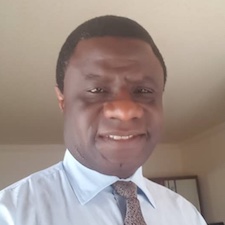
Dr. Emile Kemayou – Canada
PhD in Economics
Dr. Emile Kemayou entered the doctoral program in Economics with more than twenty years of experience across government, international development, and multilateral policy institutions. His career spans advisory roles within the Government of Canada, the African Development Bank, and various United Nations-affiliated agencies, with responsibilities ranging from macroeconomic analysis and poverty-reduction strategy design to fragile-state engagement and operational policy reform. This background in development economics, policy modelling, and cross-institutional coordination provided the foundation for a doctoral inquiry situated at the intersection of economic governance, stability, and inclusive growth.
Building on this experience, Dr. Kemayou’s dissertation examined the structural economic dynamics shaping development outcomes in low-income and fragile-state environments. His research combined applied econometric analysis with policy interpretation, reflecting Monarch’s commitment to scholarship that integrates methodological rigor with the lived realities of economic systems under stress. The study offered a nuanced examination of how macroeconomic conditions, institutional capacity, and program design converge to influence development trajectories across African contexts.
Dr. Kemayou currently serves in a senior economic role with the African Development Bank, where he contributes to the Bank’s mission of advancing sustainable economic transformation across the continent. His doctoral work deepens this engagement by providing a robust analytical framework for understanding policy effectiveness in complex environments and by reinforcing the importance of evidence-based economic decision-making. His trajectory exemplifies Monarch’s commitment to producing scholar-practitioners whose research informs both national policy and regional development strategy.
