
MONARCH GLOBAL RESEARCH INSTITUTE
PhD in
Economics
INQUIRY · ECONOMIC THOUGHT · CONTRIBUTION
Understand the ideas that shape economies. Contribute new perspectives to the debate through sustained inquiry, critical interpretation and individual faculty supervision.
PROGRAMME BROCHURE · SEPTEMBER 2026
ECONOMICS AS INQUIRY
Look beyond the model.
Examine the thinking behind it.
Economics is also a way of understanding society: how value is defined, resources are allocated and choices shape collective welfare.
36 or 60 months
Standard and extended pathways support different study paces while retaining the programme’s academic requirements.
Flexible, faculty-guided study
Primarily remote and asynchronous study, with individual supervision and milestone-based academic review. Entry is monthly, subject to admission.
A distinct scholarly focus.
Monarch’s PhD in Economics places economic theory, historical analysis, philosophical inquiry and ethical reflection at the centre of doctoral study. Candidates examine how economic ideas emerge, evolve and influence institutions, public policy and social development.
The programme supports the candidate as a reflective scholar and public thinker. Its purpose is an original contribution to knowledge—not simply the application of an established model.
Develop an independent economic voice.
Critically engage with theory, interpret institutions and policy, design rigorous inquiry, examine ethical consequences and communicate an original scholarly contribution.

YOUR DOCTORAL JOURNEY
From a significant question
to an original contribution.
Refine a question that matters, then develop the evidence and reasoning to make a defensible contribution to economic scholarship.
01 · Prepare
Develop research skills, academic writing and an understanding of the philosophy and history informing economic inquiry.
02 · Frame
Refine your question, review the literature and establish the contribution and methodology. Proposal approval precedes the research phase.
03 · Investigate
Analyse economic texts, historical sources, policy documents or other appropriate evidence. Interviews may inform the inquiry where relevant.
04 · Synthesise
Bring theoretical insights and findings into a coherent dissertation demonstrating originality, methodological discipline and critical argument.
05 · Defend your contribution.
Present and defend your dissertation before the academic committee. Faculty supervision and academic review guide progression through each milestone.
Where might your inquiry lead?
Development and institutions; public policy and political economy; economic thought and history; labour and social change; monetary and financial systems; innovation and global economic relations.
Topics and methods are refined with faculty and depend on academic approval and supervisory fit. The programme is theoretically and interpretively oriented, rather than centred solely on technical modelling.
Your interests and experience shape the direction of your research. Rather than inheriting a supervisor’s topic, you develop your own research question and refine its scope with faculty guidance, in line with doctoral standards and supervisory expertise.
ECONOMICS FACULTY
Scholarship across economies.
Perspectives across borders.
Meet two members of Monarch’s economics faculty, whose work spans finance, development and the institutions shaping economic life.

Professor Rafiq Bhuyan
Professor of Economics
Professor Bhuyan earned his doctorate in Economics at Concordia University, Montreal, and a master’s in Finance at the University of Illinois. His research connects economics and finance with entrepreneurship and microfinance. His academic career includes appointments in the United States and Kuwait, alongside extensive publication in scholarly and professional journals.
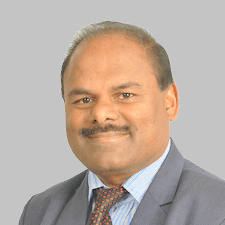
Dr. Ravinder Rena
Adjunct Professor of Economics
Dr. Rena holds doctoral and master’s qualifications in Economics from Osmania University, India. He brings more than three decades of teaching and research across Africa, Asia-Pacific and Europe. His scholarship explores development, inclusive growth, education, microfinance and sustainability, including investment and development aid in Africa. He also brings extensive postgraduate research supervision and academic journal leadership experience.
Begin with your research question.
Discuss your interests with Admissions. Research topics and supervisory arrangements depend on academic approval and the fit between the proposed inquiry and available expertise.
PLAN YOUR DOCTORAL STUDY
Academic preparation.
Research potential. Supervisory fit.
For academics, educators, policy professionals and reflective practitioners with relevant preparation and a commitment to independent inquiry.
Entry requirements.
Applicants normally hold a recognised master’s degree in economics, political economy or a related field, with a sound grounding in economic thought and the capacity for critical research. A bachelor’s degree in economics with high academic achievement may be considered on the Dean’s recommendation where preparation is sufficient.
Prior research, teaching or policy-analysis experience is advantageous but not required. The Academic Board reviews readiness and supervisory fit. Programme starts are on the first day of each month, subject to admission.
Master-in-passing
Candidates completing all doctoral requirements receive the Master of Philosophy (M.Phil.) in Business Research in passing upon conferral of the PhD.
Master-in-exit
Candidates concluding before the PhD may qualify for the M.Phil. in Business Research by submitting a completed five-chapter master’s dissertation and meeting the applicable academic requirements.
Choose a sustainable study pace.
The 36-month standard and 60-month extended pathways carry the same total scheduled tuition, with lower periodic payments over the extended pathway. Payment arrangements and additional time are governed by the current tuition and continuation policies.
Optional workshops in Switzerland offer further scholarly exchange. Confirm current programme requirements, fees and conditions with Admissions before applying.
YOUR NEXT CONTRIBUTION
What economic question
will you take further?
Bring your experience, your intellectual curiosity and your commitment to rigorous inquiry. Begin a conversation about your place in economic scholarship and how your research could deepen understanding of institutions, policy and society.
Discuss your research interests →
Explore the programme →
Apply for the PhD →
MONARCH SWITZERLAND
Vorderbergstrasse 34 · CH-6318 Walchwil, Zug · Switzerland
umonarch.ch · administration@umonarch.ch
PhD IN ECONOMICS · / 6
Print on A4 at 100% scale with background graphics enabled and browser headers and footers disabled.