Organisational change involves how people interpret a new direction and understand their place within it. My research in a global agricultural context highlighted the importance of coherence between leadership intent, organisational systems and human response. Six lessons offer a practical starting point for leaders navigating that process.
1. Change begins with sense-making
The first is to create clarity about why change is needed, how it will unfold and what it means for everyday work. Confusion can become a source of resistance. When employees can connect the proposed changes with the organisation’s purpose, its brand promise and their own contribution, they are better placed to participate.
2. Leadership behaviour carries the message
The second lesson concerns consistency between what leaders communicate and what they do. Decisions, recognition and day-to-day behaviour signal what the organisation actually values. A change message gains credibility when those signals support the stated direction.
3. Human capital is the engine of change
The third lesson is to consider human capital as part of the organisation’s capacity to change. Engagement, competence and trust influence how people respond. Employees need the capability and support to put organisational and brand values into practice as their work changes.
4. Connect the organisational system
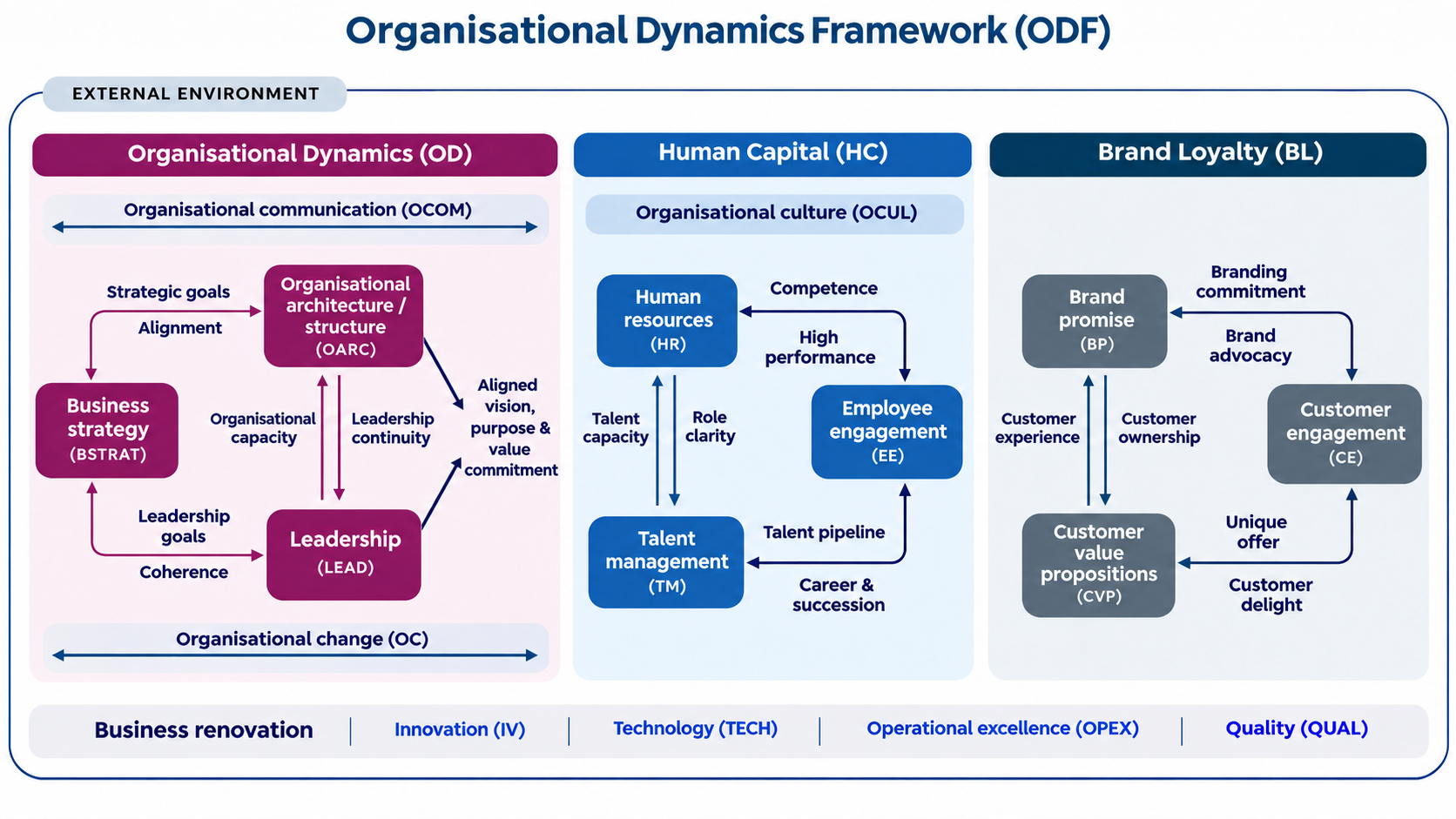
The fourth lesson is to look at the organisational system as a whole. The Organisational Dynamics Framework links strategy, structure, communication, leadership and culture. It provides a way to examine whether those elements support the change being sought and where conflicting arrangements may undermine it.
5. Make room for dialogue and psychological safety
The fifth lesson is to create space for dialogue. Employees need opportunities to ask questions, raise concerns and contribute ideas. Listening and feedback help leaders understand how the change is being experienced and where adjustments may be needed.
6. Judge progress through coherence
The sixth lesson is to examine the relationship between internal behaviour and the experience delivered to customers. Completed projects and revised structures provide part of the picture. Leaders should also ask whether people understand the direction and whether their working conditions support consistent delivery of the brand promise.
Taken together, these lessons suggest that leading change requires continuing attention to purpose, capability, behaviour and trust. The work extends beyond announcing a plan. It involves helping people understand it, enabling them to act and learning from their experience as the organisation moves forward.
How the lessons fit together
These six lessons draw on the same doctoral research that informed the Organisational Dynamics Framework. The framework brings together organisational dynamics, human capital and brand loyalty, helping leaders consider how changes in strategy, structure, leadership and people systems affect employees’ ability to deliver the organisation’s promise to customers.